Metal surface finishing: textures, reflections and the perception of materials in design projects
Metal surface finishing: how polishing, brushing, oxidising and painting change light, texture and the perception of space.
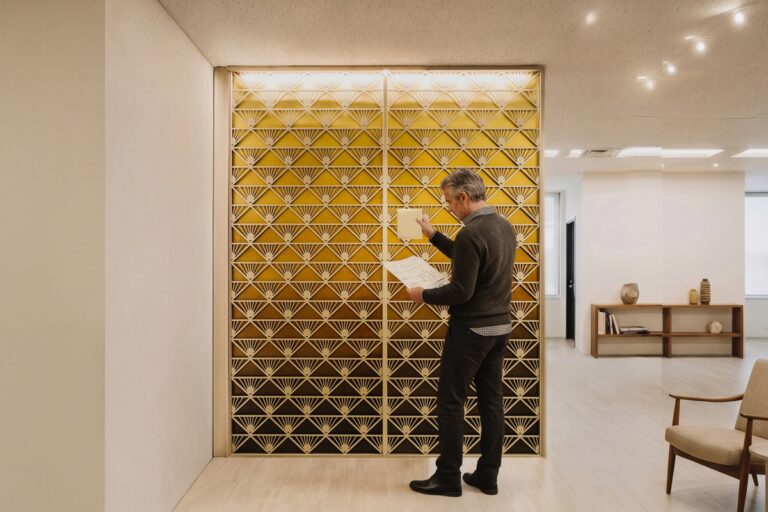
In interior design, metal is far more than a structural element. It also plays a key role in defining the visual character of a space. Its level of shine, texture and colour variations all influence how a surface is perceived within an architectural setting.
For architects and designers, choosing metal surface finishes is therefore an integral part of the design process. Metalbril develops bespoke metal finishes for residential and contract interior design projects, overseeing every stage with technical expertise and craftsmanship.
A finish determines how metal interacts with light, affects its texture and relates to other materials. The choice should therefore take into account the lighting, the proportions of the space and the role of the metal element within the overall design.
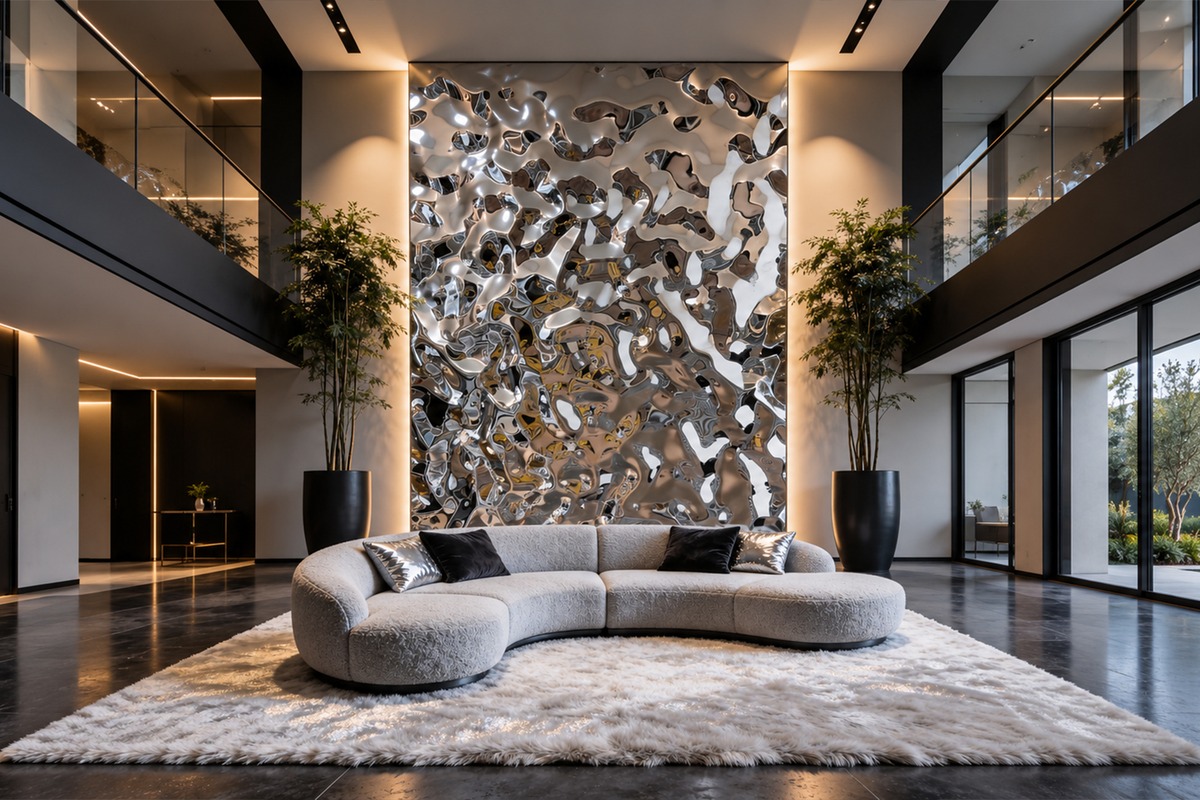
Polished surfaces reflect light more noticeably than matt or satin finishes. In a flagship store, a polished metal wall panelling system can enhance the lighting scheme and draw attention to the surrounding architectural features. In a hotel lobby, polished metal details can create visual focal points and add character to the overall setting without the need for larger surface areas.
Less reflective finishes offer a more understated appearance and are well suited to projects where metal needs to blend in with other materials without drawing too much attention.
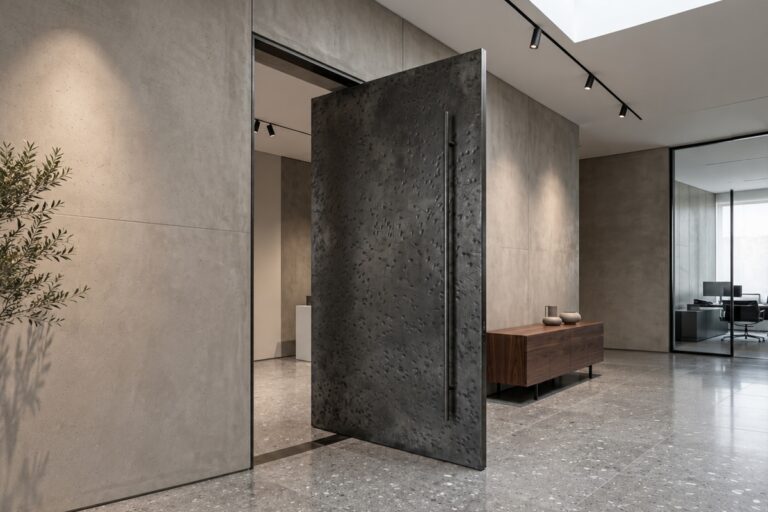
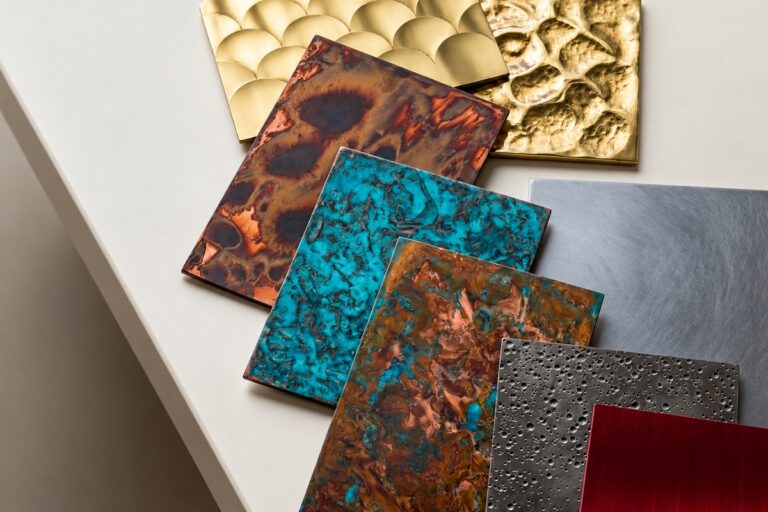
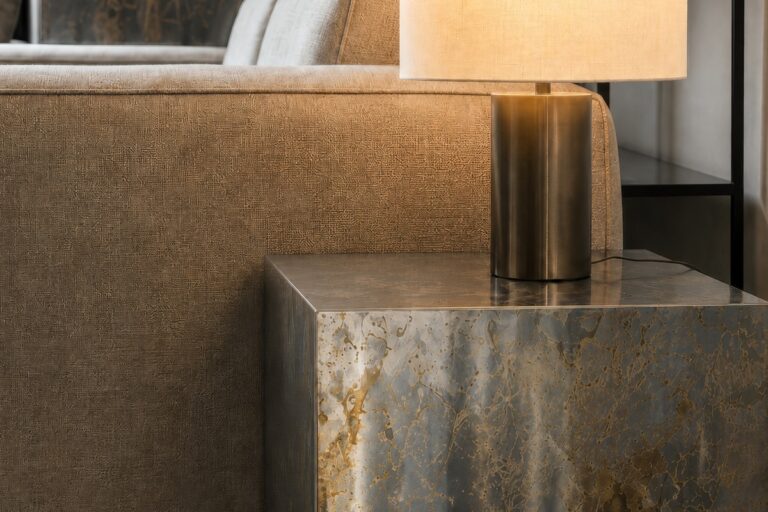
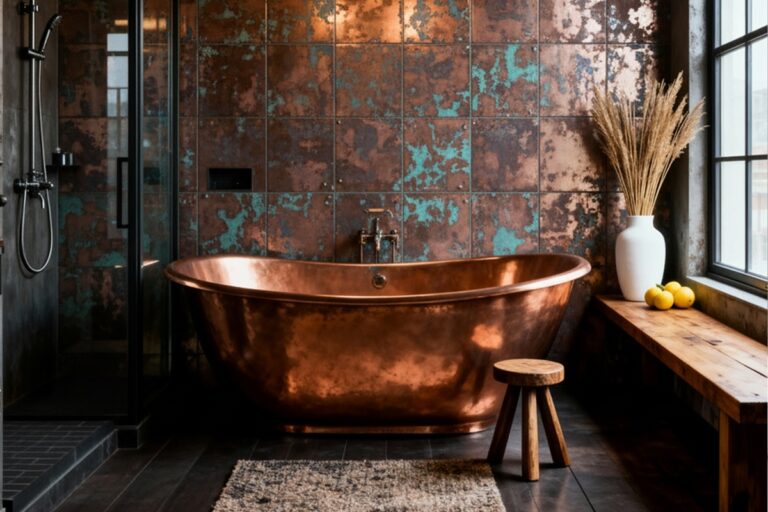
The tactile and visual qualities of a surface also depend on its texture. Textured finishes introduce variations and irregularities that give metal a more expressive appearance, while oxidised and burnished treatments produce rich, deep tones with nuances that vary according to the material and the treatment applied.
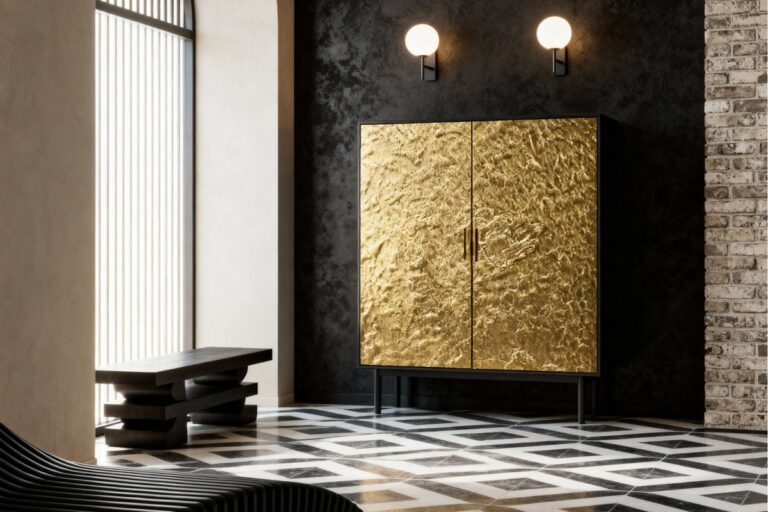
In a private residence, a burnished brass feature can become a distinctive accent, while in a showroom, an oxidised surface can help establish a recognisable brand identity. The final result also depends on how the metal is combined with complementary materials such as wood, glass, stone and textiles.
There is no single best finish for every application. Each treatment offers specific characteristics and should be selected according to the base material, the desired effect and the conditions in which the finished element will be used.
Polishing gives the surface a brighter, more reflective appearance, enhancing the metal’s inherent qualities. It is particularly suitable for decorative details, profiles, furniture components and wall cladding where light plays an important role in the overall visual effect.
Brushing, also known as satin finishing, creates a surface with a fine, directional texture and more subdued reflections than a mirror polish. It is a popular choice for architectural details, furniture and wall cladding where the aim is to highlight the metal without making it excessively shiny.
Controlled oxidation produces warm, dark tones with subtle variations depending on the metal and the process used. This type of finish adds depth to the surface and gives panels, decorative elements and bespoke components a distinctive character.
Painting allows the colour and level of gloss or mattness to be defined, offering different visual effects depending on the coating system applied. In contract projects, a painted finish can help coordinate metal elements with colour palettes and complementary materials, for example in retail wall cladding or the details of a hospitality interior.
The selection process should start with the visual effect the designer wants to achieve, while also taking into account the technical requirements of the element and its installation environment. To identify the most suitable treatment, it is useful to consider:
Metalbril develops bespoke samples based on the specific requirements of each project, allowing designers to assess textures, reflections and colours in person before production begins. Samples can be viewed under lighting conditions that replicate those of the intended setting, helping ensure that the finished result meets expectations.
For over forty years, Metalbril has supported architects, interior designers and general contractors in developing bespoke projects, overseeing the entire process from the initial concept and surface finishing through to installation. Managing manufacturing processes and surface treatments in-house allows the company to pay close attention to every detail and deliver results that meet both the aesthetic and technical requirements of each project.
For architecture and interior design professionals, Metalbril provides a single technical partner capable of turning design concepts into finished pieces, coordinating every stage of production with technical expertise and craftsmanship.

The choice depends on the type of metal, the operating environment and the required levels of durability, ease of maintenance and visual appeal. For industrial applications, the treatment should be selected according to operating conditions and performance requirements, rather than appearance alone.
For bespoke furniture, the metal finish should enhance the piece’s shape and complement the other materials used, while taking into account the setting in which it will be placed. The choice also depends on the desired effect: colour, sheen and texture can highlight construction details, create contrasts or contribute to a more understated overall appearance. The technical properties of the finish should also be considered, particularly its durability and suitability for the intended use.
Are you developing an interior design or contract project and looking for a finish that brings out the best in metal? Contact Metalbril for technical advice and to request bespoke samples tailored to your project.

Fill out the form to request a no-obligation quote or to get more information about our services.
 Back to top