Metal finishes: how to choose and combine them in interior design projects
Metal finishes for interior design: polished, brushed, oxidised, painted and textured, and how to combine them with colours and materials.
Metal finishes help define the identity of an interior, influencing colour, light reflections and the perceived texture of furniture and architectural details. For architects, interior designers and general contractors, choosing the right finish means considering how it works with other materials, the colour palette and the characteristics of the elements to be created as part of the project.
In contract, retail and hospitality projects, finishes are part of a broader process involving the technical development and production of bespoke metal furniture and components. Metalbril manages the entire production process for bespoke metalwork, from on-site measurements and technical drawings to manufacturing, finishing and installation. Every stage is carefully managed to turn project specifications into custom-made elements ready to be integrated into the architectural setting.
Metal surface treatments produce different results in terms of colour, gloss and texture. The choice depends on the base metal, the desired effect and the intended application.
Polishing gives metal surfaces a bright, reflective appearance, which can range from a subtle sheen to a mirror finish. It is suitable for features such as counters, profiles and architectural details where reflections play an important role in the overall visual effect.
Brushing gives metal a more subdued appearance, with a directional grain that softens reflections. It is suitable for cladding, furniture and architectural details where the aim is to highlight the metal texture without emphasising its shine.
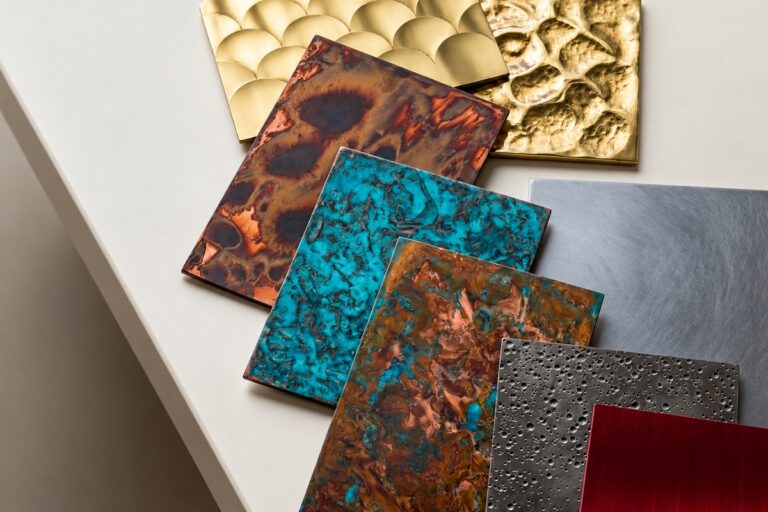
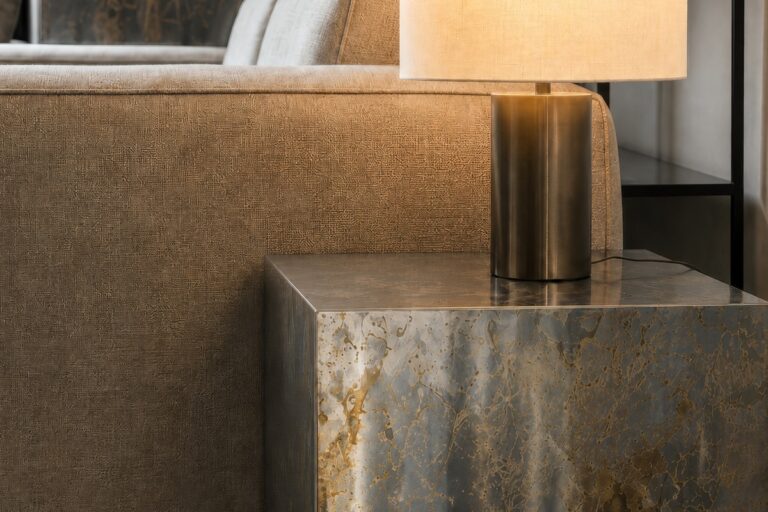
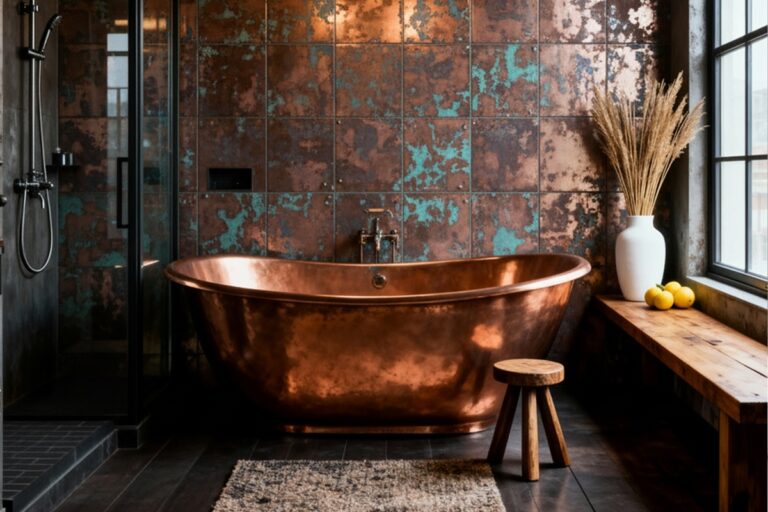
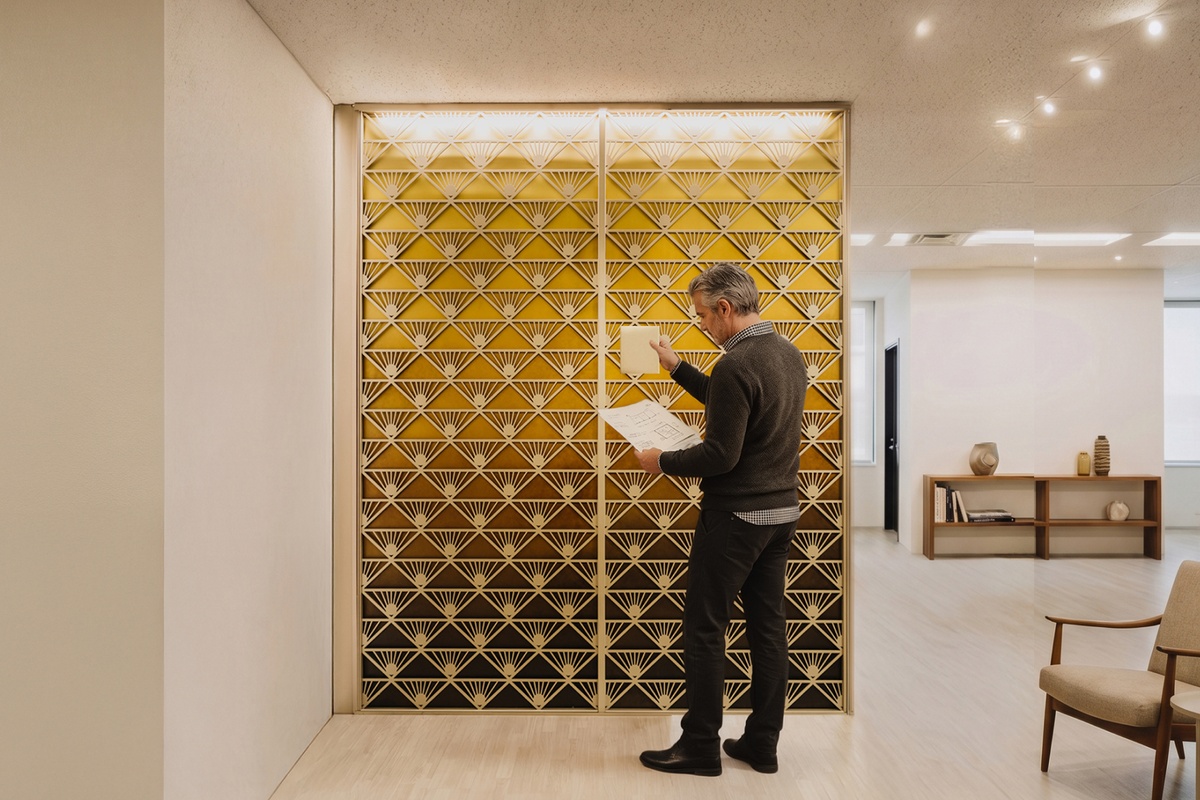
Controlled oxidation, also known as burnishing, creates dark, warm tones and variations in colour depending on the metal being treated. Brass, copper, iron and stainless steel can all produce different results, making these finishes suitable for reception areas, decorative panels, furniture and architectural details.
Painting allows the surface colour to be customised, with transparent, matt, glossy or textured finishes available. It is a versatile option for integrating metal elements into a project’s colour palette and, depending on the coating system used, can also help protect the material.
Textured finishes bring out surface patterns, tonal variations and visual depth. They are ideal for elements that need a distinctive presence, such as counters, cladding and bespoke furniture, particularly in retail and hospitality projects.
Choosing metal finishes requires consideration of the colour palette, textures and gloss levels of the other materials in the composition. Wood, natural stone, glass and ceramic surfaces can create different combinations depending on the tones and finishes selected.
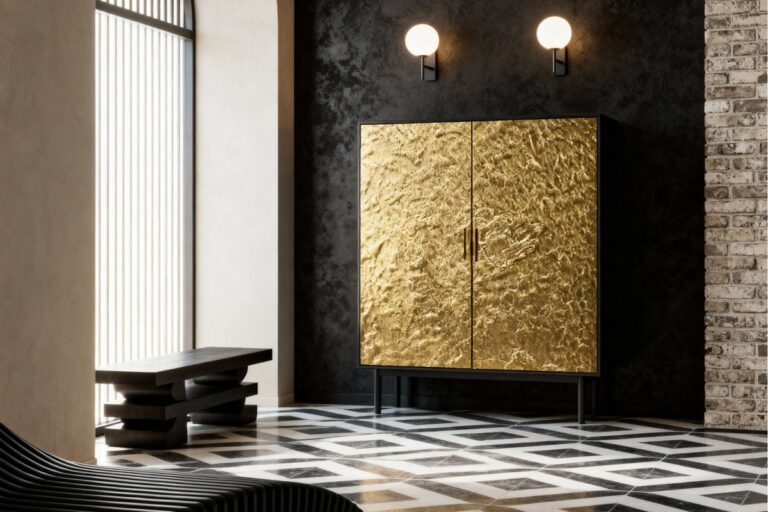
For example, brass with warm undertones can complement dark woods and marbles with pronounced veining, while brushed stainless steel works well in pared-back compositions featuring light stone and glass. Burnished or oxidised surfaces, meanwhile, introduce chromatic depth and more pronounced textural contrasts.
Lighting also affects the final result. Glossy surfaces reflect more light and their surroundings, while brushed finishes produce softer, more restrained reflections. For more complex projects, reviewing samples helps designers assess how different combinations work together in practice.
Combining different finishes creates more layered visual effects and helps distinguish elements with different functions without making every surface look the same. The success of the overall composition depends on the balance between tones, textures, gloss levels and proportions.
To achieve a balanced result, it is useful to select one dominant finish and use the others as accents to highlight specific details.
In contract projects, the choice must take into account both the visual result and the conditions of use. Each finish should be assessed in relation to the base metal, the intended application, exposure and maintenance requirements. For outdoor applications in particular, it is essential to check that the treatment is suitable for exposure to the elements and to determine whether additional protection is needed.
Metalbril develops bespoke metalwork for architecture, interior design and contract projects, overseeing the design, production and installation stages. Finishes can be assessed by requesting custom samples or viewing the sample collection at Metalbril’s premises. This allows designers to check colours, textures and reflections before production begins.

The most suitable finishes depend on the style of the furniture, the metal used and the desired result. Polishing enhances reflections, brushing reduces shine, while oxidation and burnishing introduce deeper tones. Painting allows the colour to be customised, while textured finishes add depth and character.
Outdoor applications require finishes suited to the base metal and its exposure to the elements. Suitability depends on the treatment, the protective coating system and the expected environmental conditions. The choice should therefore be assessed for each specific application.
Interior projects can incorporate polished, brushed, oxidised, burnished, painted and textured finishes. The choice depends on the colour palette, lighting, complementary materials and the function of the element.
Looking for bespoke metalwork for a contract project? Get in touch with Metalbril to discuss your project and request technical advice on metal finishes.

Fill out the form to request a no-obligation quote or to get more information about our services.
 Back to top