Designer interior doors: metalwork and finishes for contemporary projects
Designer interior doors in metal: materials, finishes and bespoke metalwork for high-end contract and residential projects.
In high-end interior design, a door can become a distinctive feature of a wider design scheme. For architects, interior designers and general contractors, developing designer interior doors means finding a partner who can turn an idea into a component that meets specific aesthetic, technical and functional requirements. This process calls for a diverse range of skills, from design and material selection to manufacturing, finishing and final installation.
Metalbril works alongside designers throughout the entire process, from initial development to manufacturing and installation. By providing a single point of contact, the company helps turn ideas into bespoke components.
In contemporary door design, profile thickness, the precision of joints and the interplay between metal components and other materials all contribute to the aesthetic and structural quality of the finished product.
A minimalist frame can enhance a glass door in a hotel lobby, while brushed or burnished brass inserts can become a distinctive feature in a private residence. In a boutique or showroom, metal profiles can be designed to echo the finishes of counters, display units and wall cladding.
Achieving the desired result requires translating the concept into a practical solution, taking proportions, materials and manufacturing feasibility into account. Metalbril supports clients throughout this process, developing the necessary technical solutions and defining the details according to each project’s specific requirements.
Each material offers different possibilities in terms of fabrication, visual impact and finish. The right choice depends on the architectural style, the component’s characteristics and the desired effect.
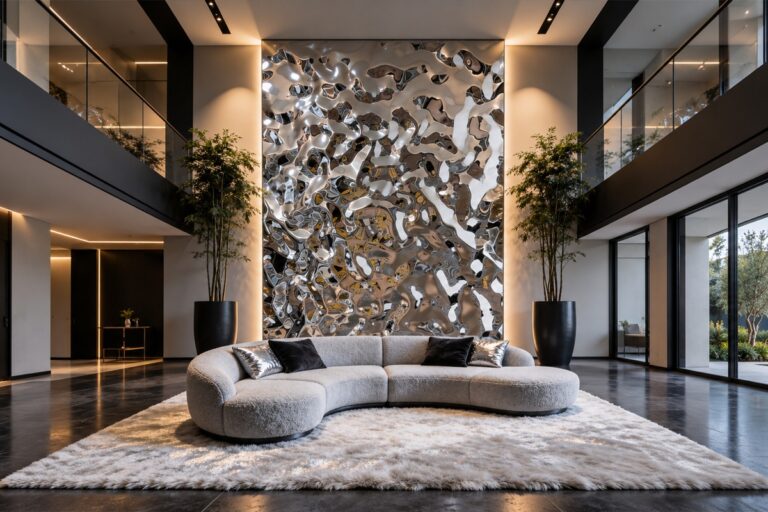
From satin finishes and mirror polishing to oxidised surfaces, stainless steel lends itself to a wide range of interpretations. It is well suited to profiles, frames and details with a contemporary character, with surface finishes that can be customised to achieve the desired look.
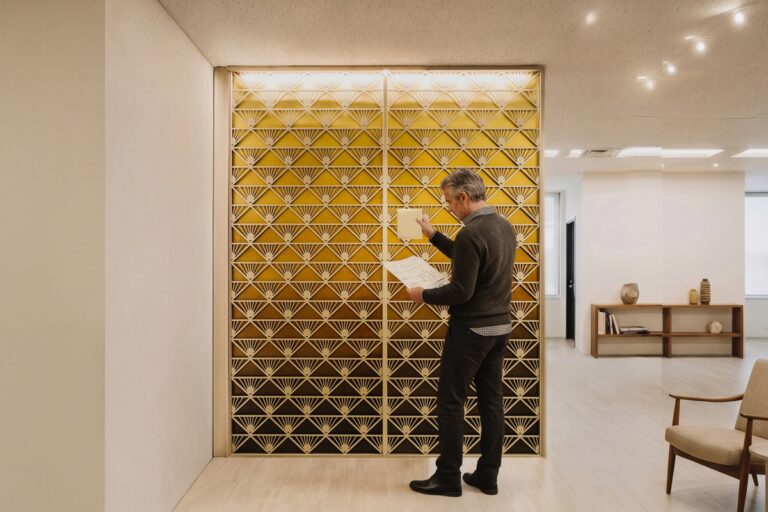
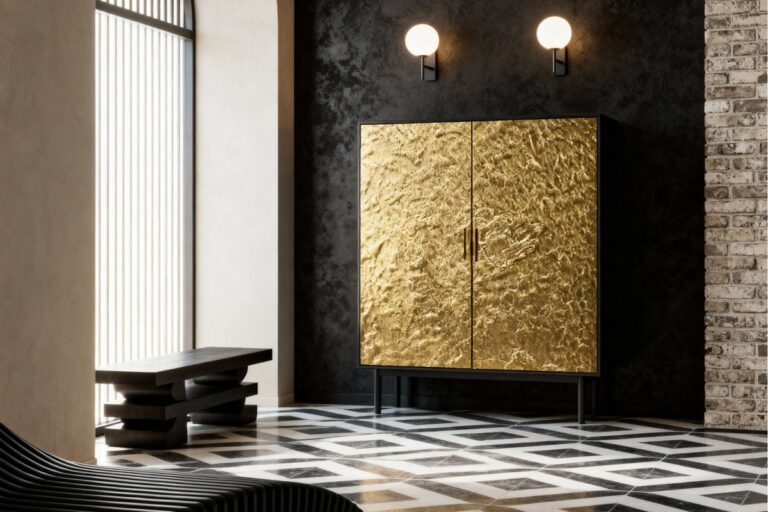
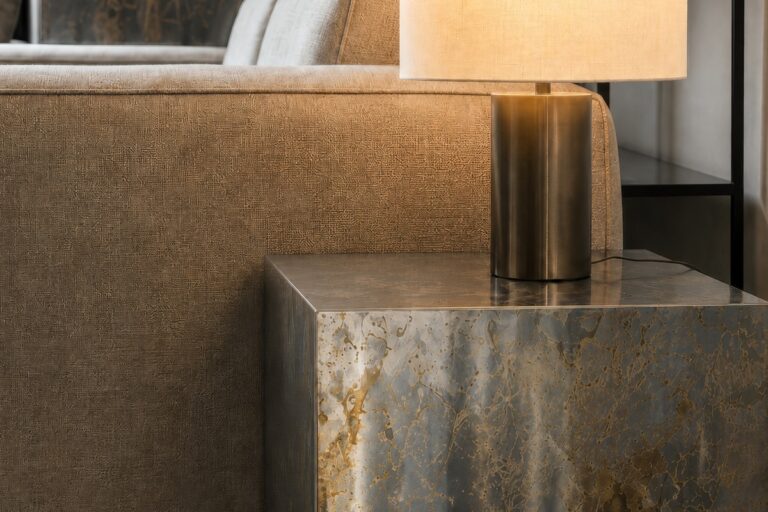
Brass introduces warm tones, ranging from golden hues to deeper shades achieved through burnishing. In designer interior doors, it can enhance profiles, handles and inserts, creating visual connections with lighting, furniture and other metal elements.
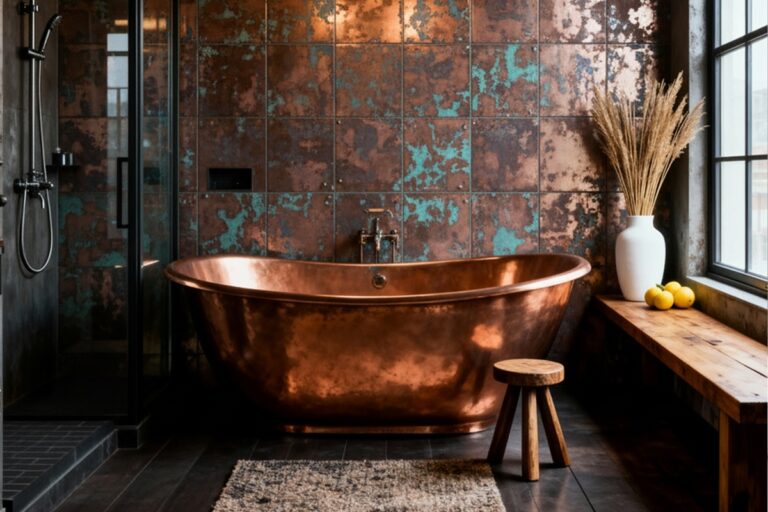
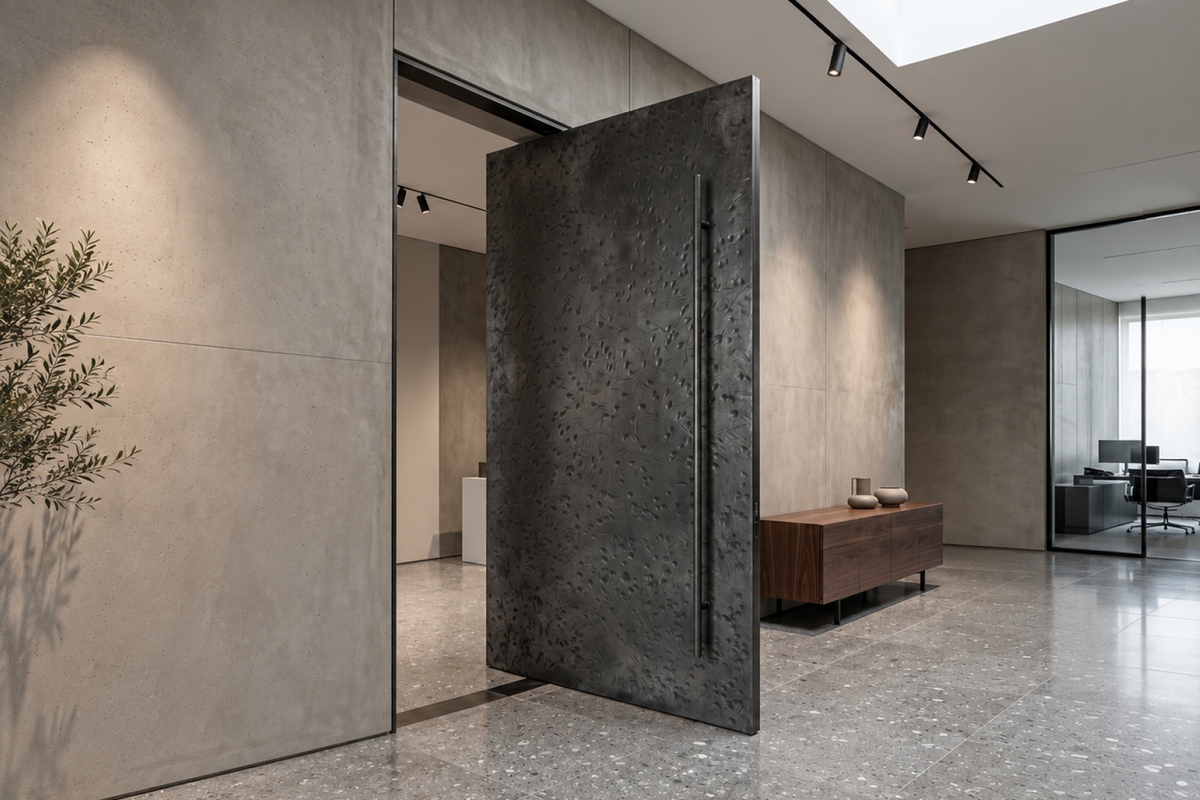
Iron stands out for its strong visual presence. Oxidised finishes can produce variations in colour and tone, giving surfaces a distinctive character that works particularly well in projects with a strong design identity.
Aluminium is well suited to profiles and structures in which the thickness and shape of the cross-section help define the overall appearance, while maintaining a lightweight, minimalist look. Custom finishes make it possible to coordinate aluminium with glass, wood, stone and painted surfaces.
Metal finishes for doors determine how a surface reflects light, expresses the character of the material and interacts with the other elements in a space.
The intended use of the door must also be taken into account. In a hotel or a high-traffic retail space, for example, it is important to consider usage conditions and maintenance requirements. Some treated metal surfaces require specific care when cleaning.
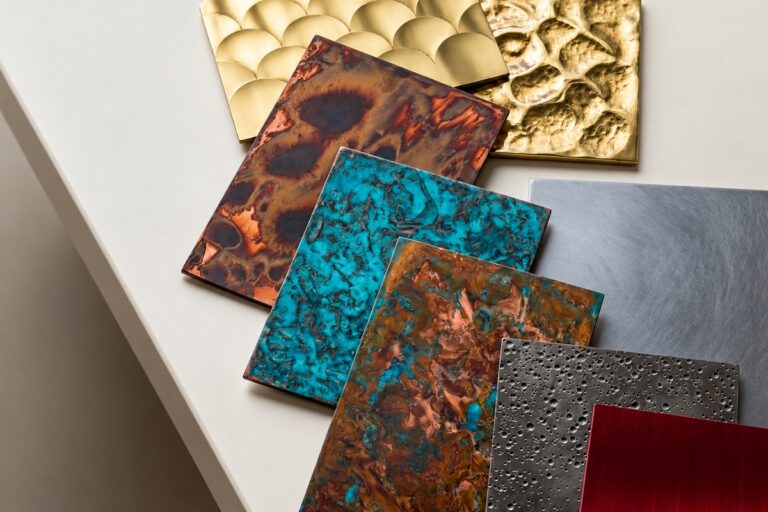
From polished and satin surfaces to burnished, oxidised and painted finishes, each treatment offers different creative possibilities. The choice depends on the material, the desired effect and how the finish relates to the other elements in the design scheme. A door finish can echo that of fitted furniture, wall panelling, cladding and decorative accessories, or introduce a contrasting accent.
In a private residence, for example, burnished brass can complement the finishes of taps and lighting fixtures, while an oxidised metal surface can distinguish suite entrances in a boutique hotel. In high-end retail environments, customised profiles and finishes can help reinforce a brand’s identity.
To identify the most suitable finish for each project, Metalbril develops custom samples tailored to the client’s requirements. Samples can be viewed in person at the company’s premises or requested for delivery, allowing clients to compare materials, colours and textures before approving the final finish for production.
Metalbril’s contribution goes beyond metalworking. The company supports clients at every stage of the project, from initial concept development and technical design to manufacturing and installation. This approach makes it possible to address aesthetic and construction requirements from the outset, identifying the materials, processes and finishes best suited to the intended result.
This is particularly important in contract projects, where doors and metal components must integrate with furniture, wall coverings and other architectural elements. Whether the project involves a private residence, a hospitality venue or a retail store, Metalbril coordinates design and execution to turn initial requirements into bespoke components, ready to be installed in the setting for which they were conceived.

Popular trends in contemporary projects include slim profiles, minimalist frames, glass inserts and custom metal details. Burnished brass, satin-finished stainless steel and oxidised surfaces introduce distinctive accents that can be coordinated with lighting and the other materials used throughout the project.
Current design trends focus on customisation, careful attention to construction details and the integration of doors into the overall architectural language. In high-end projects, bespoke metal finishes create visual connections between doors, furniture and wall coverings, while different textures and surface treatments help define the character of each element.
Planning a project involving designer interior doors with bespoke metal frames or details? Contact Metalbril to develop your ideas with our team, from defining the technical solutions to manufacturing and installation.

Fill out the form to request a no-obligation quote or to get more information about our services.
 Back to top